


How to Develop Women’s Ankle Boots for Better Fit in EU and US Markets
Sep 30, 2026
Leave a message

How to Develop Women's Ankle Boots for Better Fit in EU and US Markets
Why Women's Ankle Boot Fit Is More Than a Size Chart
When developing women's ankle boots, getting the length right is only part of the job.
A boot can match the requested EU or US size and still feel too tight around the instep, loose at the ankle, or difficult to wear with everyday clothing.
For footwear brands and buyers, several measurements work together:
- Foot length
- Forefoot width and girth
- Instep volume
- Ankle position
- Shaft opening circumference
- Heel hold
- Lining thickness
This becomes particularly important when developing one style for both European and US markets.
Rather than simply converting an EU size into a US size, the manufacturer and buyer should agree on the fit target, last dimensions and grading method before sampling.
That is why fit should be solved during sample development-not after bulk production.
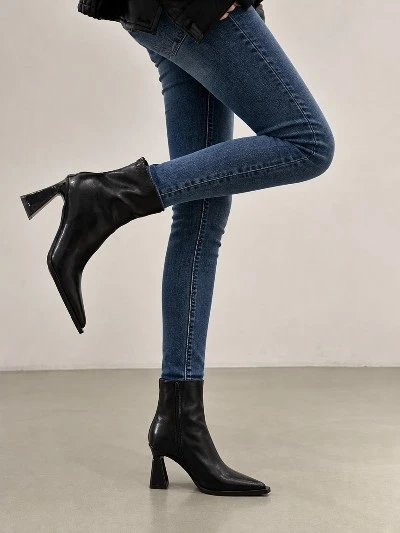
1. Start With Three Key Measurement Areas
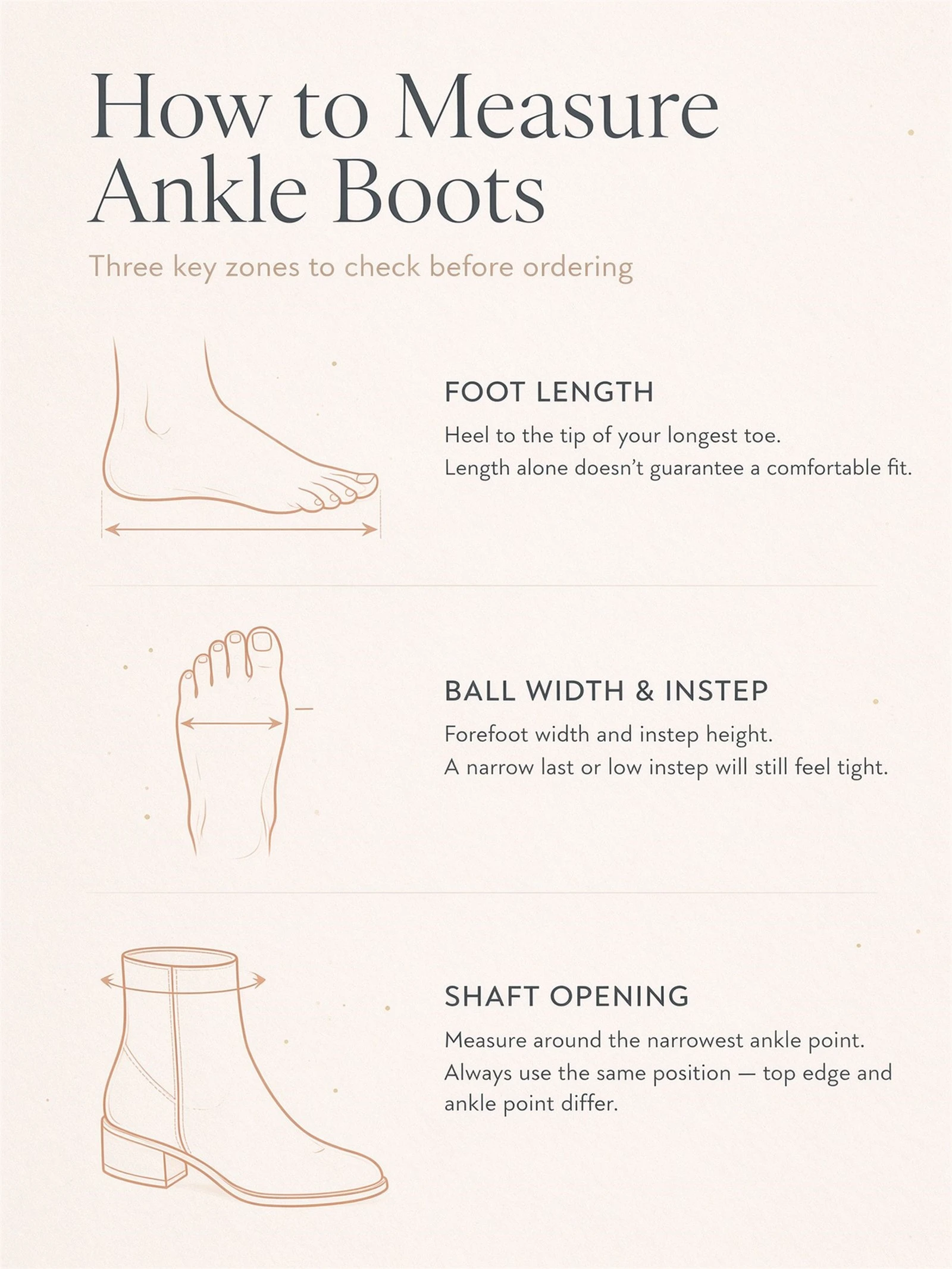
When reviewing a women's ankle boot, we recommend looking at three connected areas first.
Foot Length
This is the basic measurement from the heel point to the toe reference point on the last.
However, length alone does not tell you whether the boot will feel comfortable.
Foot Girth and Instep
The forefoot and instep determine how much internal volume the foot has.
A boot can have the correct length but still feel tight because the last is too narrow or the instep is too low.
Ankle Boot Opening
The shaft opening should also be measured consistently.
One important detail is where the measurement is taken.
The top opening and the narrowest part around the ankle are not necessarily the same point. If the factory and buyer use different measuring positions, the numbers may look different even when they are measuring the same sample.
For this reason, the measuring point should be clearly marked on the specification sheet.
A Simple Fit Review
| Measurement | What It Affects |
|---|---|
| Foot length | Overall shoe length and toe room |
| Forefoot girth | Width and pressure across the front of the foot |
| Instep volume | Entry and pressure over the top of the foot |
| Ankle circumference | Ankle hold and comfort |
| Shaft opening | Ease of entry and styling |
| Lining thickness | Actual internal space |
This simple table can also make communication between a footwear buyer and manufacturer much easier.
2. Don't Approve the Fit From One Size Only
One of the easiest mistakes during ankle boot development is to approve one sample size and assume the rest of the range will work in the same way.
It may not.
As a boot is graded into different sizes, several proportions need to change together. These can include:
- Toe length and shape
- Forefoot width
- Instep volume
- Heel position
- Ankle position
- Shaft opening
For example, simply adding length to a larger size without giving enough attention to upper volume can change the way the boot holds the foot.
The same issue can appear around the ankle.
If the shaft opening becomes too generous in larger sizes, the boot may lose some of its intended ankle hold.
This is why buyers developing footwear for both EU and US markets should ask the manufacturer for a grading chart rather than checking only the middle size.
3. The Shoe Last Has a Bigger Impact Than Many Buyers Expect
When discussing women's ankle boot fit, the shoe last deserves special attention.
The last determines much of the internal shape of the boot. Two boots can have almost identical external measurements but feel very different when worn because their lasts are different.
Pay particular attention to:
- Toe shape
- Forefoot width
- Instep height
- Heel seat
- Ankle position
This is particularly important for pointed-toe ankle boots.
A pointed toe creates a very different fit requirement from a rounded or almond toe. If the visible toe shape is changed without properly reviewing the last, the internal space available to the foot may also change.
For a custom ankle boot project, it is therefore useful to discuss the last and upper together, rather than treating the upper pattern as a separate issue.
4. Check the Zipper as Part of the Fit
The zipper is not just a hardware detail.
On an ankle boot, its position can affect how easily the foot enters the boot and how the upper sits around the ankle.
During sample review, check:
- Is the zipper easy to open and close?
- Does the foot enter without excessive pressure?
- Does the zipper sit flat after closing?
- Does the upper twist around the zipper?
- Is the zipper position comfortable when walking?
- Does the zipper create a visible ridge under trousers?
A side zipper, for example, may give a different wearing experience from a back zipper even if the overall boot measurements are similar.
This is one reason why zipper construction should be checked on the actual sample rather than judged only from a technical drawing.
5. Lining Thickness Can Change the Fit
Lining is another detail that is easy to overlook during development.
A thin textile lining and a thicker brushed or winter lining do not create exactly the same amount of internal space.
If the ankle boot is designed for colder weather, buyers should tell the manufacturer what type of socks the target customer is expected to wear.
Each combination can produce a different wearing experience.
Simply making the boot larger is not necessarily the best solution.
Too much internal space can affect heel security, ankle support and the overall shape of the upper.
The better approach is to test the actual lining material in the sample and then make adjustments based on how the boot is intended to be worn.
6. A Practical Sample Development Example
Here is where the sample process becomes particularly important.
Imagine an ankle boot that looks correct on the sample but feels tight around the ankle when worn with trousers.
The first reaction might be to increase the entire shaft circumference.
But that could change the silhouette more than necessary.
Instead, the development team can separate the problem into several questions:
- Is the shaft opening actually too small?
- Is the zipper position restricting entry?
- Is the ankle seam sitting in the wrong place?
- Is the lining taking up more internal space than expected?
- Does the problem occur only with certain trousers or socks?
After comparing the measurements with the actual fitting result, the manufacturer can adjust the specific area causing the problem rather than simply making the entire boot larger.
The revised sample can then be checked in the main size, an adjacent size and with the intended clothing combination.
This approach helps protect the original design while addressing the actual fit issue.
This is also why a physical sample is so important in custom footwear development. A measurement sheet tells you what the boot measures. A fitting test tells you how those measurements behave when the boot is actually worn.
7. What Should You Ask a Women's Ankle Boot Manufacturer?
Before approving a sample for bulk production, buyers should clarify several points with the factory.
Make sure the measuring points are clearly defined.
Tell the manufacturer whether the boot is intended to have a slim, regular or more relaxed fit.
Do not review only the sample size. Ask how the measurements change across the complete size range.
Ask where the ankle and shaft measurements are taken.
The zipper should be evaluated on the physical sample, including entry, closing and walking.
The exact lining material and thickness used in the approval sample should be recorded.
If customers are expected to wear the boots with jeans and regular socks, say so during development.
The more specific the brief is at the beginning, the fewer assumptions the factory has to make later.
Women's Ankle Boot Fit Checklist
Before moving into bulk production, review these points:
| Fit Area | Buyer Check |
|---|---|
| Length | Is there sufficient toe room? |
| Forefoot | Does the boot feel too narrow? |
| Instep | Is there enough internal volume? |
| Ankle | Does the boot hold the ankle without excessive pressure? |
| Shaft opening | Is it appropriate for the intended styling? |
| Zipper | Does it open, close and sit correctly? |
| Lining | Does the lining change the intended fit? |
| Grading | Does the fit remain balanced across sizes? |
| Wear test | Has the boot been tested with the intended socks and clothing? |
Final Thoughts: Develop the Fit Before You Develop the Bulk Order
A well-fitting women's ankle boot is the result of several details working together.
Foot length matters, but so do forefoot girth, instep volume, ankle position, shaft circumference, lining and zipper construction.
For brands and wholesalers developing ankle boots for EU and US markets, the safest approach is to settle the measurement method, last, grading and wearing conditions during the sample stage.
And don't treat the sample as simply a visual approval.
Use it to test the actual fit.
That is where small changes to the last, opening, lining or upper construction can be made before they become expensive bulk-production problems.
Developing Your Own Women's Ankle Boots?
If you are working on a new ankle boot collection, share your reference design, target market, size range and estimated quantity with us.
We can discuss shoe last development, material selection, sample making, grading and custom women's ankle boot production based on your requirements.