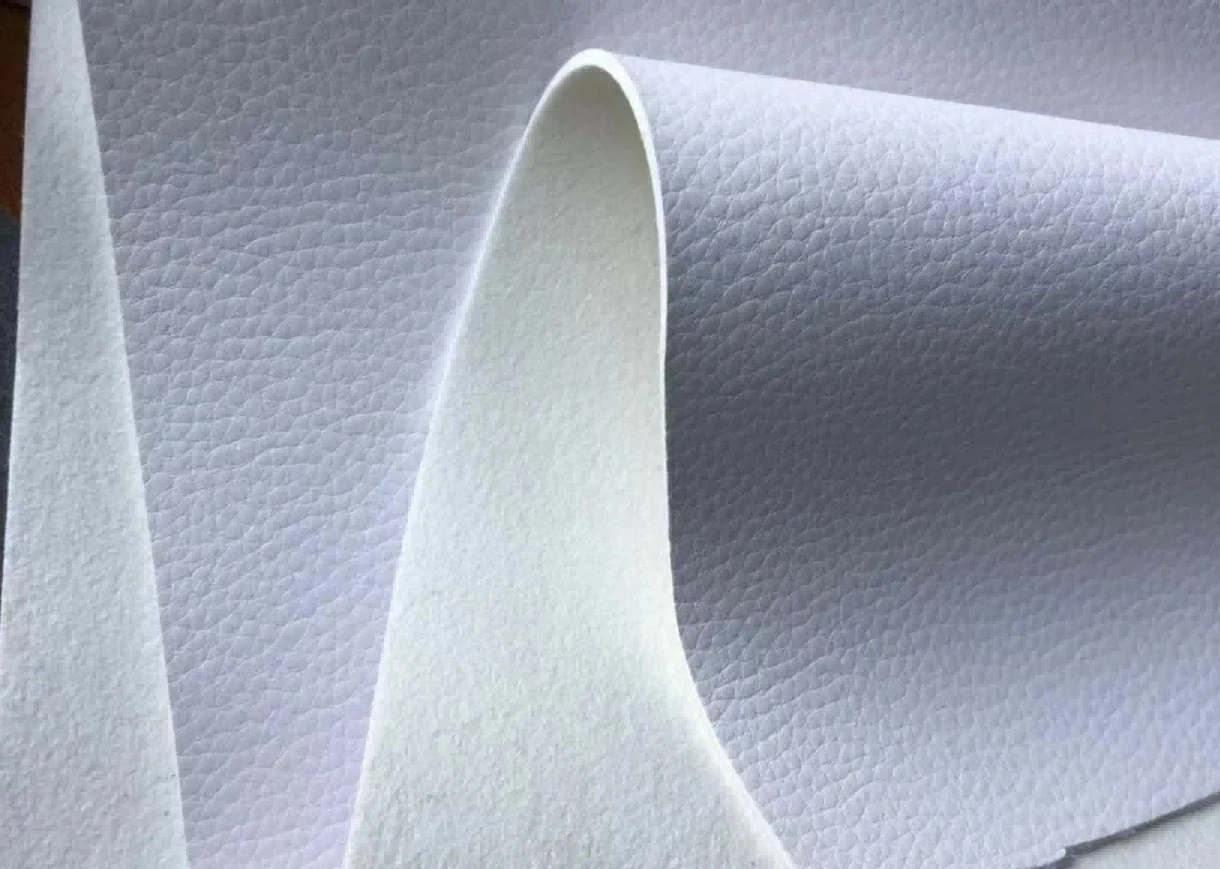
Microfiber Leather In Footwear Uppers
Sep 29, 2026
Leave a message

Microfiber Leather in Footwear Uppers
Footwear uppers are commonly made from several major material groups, including natural leather, synthetic leather, mesh, and textile materials. The material selected for an upper has a direct impact on the shoe's appearance, weight, flexibility, breathability, durability, water resistance, and overall cost.
Natural leather offers excellent tensile strength, flex resistance, durability, and natural breathability. However, it generally requires more careful maintenance, has limitations in water and washing resistance, and can have a higher material cost. For these reasons, synthetic alternatives are widely used in many modern sports and lifestyle footwear applications.
What Is Microfiber Leather?
Microfiber leather, also known as microfiber synthetic leather or microfiber synthetic suede depending on its surface construction, is a high-performance synthetic leather material developed to provide a combination of leather-like appearance and advanced functional properties.
In footwear manufacturing, microfiber leather is commonly produced using an ultra-fine fiber nonwoven substrate combined with polyurethane (PU). Through processes such as impregnation, wet coagulation, fiber separation, and surface finishing, the material is engineered to create a dense and uniform fiber structure that can provide a leather-like hand feel and appearance.
Compared with conventional synthetic leather, high-quality microfiber leather can offer a more refined structure and a better balance of flexibility, abrasion resistance, strength, and weight. Its performance can also be modified through different surface treatments and finishing processes to meet specific footwear requirements.
Key Characteristics of Microfiber Leather for Shoe Uppers
- Lightweight construction: Microfiber leather can reduce upper weight while maintaining a structured appearance, making it suitable for performance and lifestyle footwear.
- Good flex resistance: Its fiber-based structure provides good flexibility and resistance to repeated bending, which is important for footwear subjected to frequent movement.
- High mechanical strength: Properly engineered microfiber materials can provide good tensile strength, tear resistance, and dimensional stability.
- Consistent appearance: Unlike natural leather, microfiber leather can offer relatively consistent thickness, texture, color, and surface finish across production lots.
- Design flexibility: It can be produced with different grain patterns, smooth finishes, embossed textures, colors, and surface treatments to support different footwear designs.
- Easy-care characteristics: Many microfiber leather constructions offer better resistance to moisture and routine cleaning than untreated natural leather, although actual performance depends on the specific material and finishing system.
- Potential for functional finishing: Depending on the construction, microfiber leather can be engineered for improved water resistance, breathability, softness, abrasion resistance, and other application-specific requirements.
Why Is Microfiber Leather Used in Sports Shoes?
Sports footwear often requires a balance between support, flexibility, durability, weight, and appearance. Mesh and engineered textile materials are widely used where ventilation and flexibility are priorities, while leather-type materials are often selected where greater structure, protection, or a more premium appearance is required.
Microfiber leather can bridge part of this gap. It provides a more structured and leather-like upper construction than many lightweight textile materials, while generally offering more consistent weight and material properties than natural leather.
It is therefore used in a variety of footwear categories, including:
- Running and training shoes
- Indoor and court sports footwear
- Casual sneakers
- Lifestyle and fashion sneakers
- Dance sneakers
- Children's footwear
- Work and uniform footwear
- Selected outdoor footwear
- Golf and other specialty sports footwear
Microfiber Leather vs. Natural Leather
Microfiber leather should not simply be viewed as a cheaper replacement for natural leather. The two materials have different structures and performance characteristics, so the appropriate choice depends on the intended footwear application.
| Property | Natural Leather | Microfiber Leather |
|---|---|---|
| Material structure | Natural animal hide structure | Engineered microfiber and polymer structure |
| Appearance | Natural grain and character | Consistent engineered grain and surface finish |
| Flex resistance | Generally very good | Generally good to very good, depending on construction |
| Weight | Varies by leather type and thickness | Can be engineered for relatively low weight |
| Breathability | Naturally breathable depending on leather structure | Depends strongly on fiber structure, perforation, and finishing |
| Moisture resistance | Requires appropriate treatment for higher water resistance | Can be engineered for improved moisture resistance |
| Thickness consistency | Natural variation may occur | Generally more consistent in mass production |
| Design consistency | Natural variation is part of the material character | Highly controllable color and surface finish |
| Typical positioning | Premium, heritage, leather-focused footwear | Performance, lifestyle, fashion, and functional footwear |
How Microfiber Leather Performance Can Be Improved
Not all microfiber leather has the same performance. For footwear OEM and ODM projects, the material should be selected according to the construction and functional requirements of the finished shoe rather than simply by material name.
For sports and performance footwear, particular attention may be given to moisture management, breathability, softness, flex resistance, abrasion resistance, and surface durability. Different fiber structures, polyurethane formulations, perforation patterns, backing constructions, and finishing treatments can be used to adjust these characteristics.
For example, improving moisture management and air permeability can make microfiber-based uppers more suitable for sports footwear, while adjusting softness and surface finishing can improve comfort and the overall hand feel of the shoe.
Microfiber Leather for Custom Footwear Manufacturing
For private label and custom footwear development, microfiber leather can be combined with mesh, textile, synthetic leather, or reinforcement components within the same upper. This allows footwear designers to balance appearance, support, breathability, durability, and target cost.
Material selection should therefore be considered together with the shoe's construction, intended use, outsole design, target price, order quantity, and required testing standards. A suitable microfiber specification for a fashion sneaker may be very different from one designed for a high-flex sports shoe.
At the OEM/ODM development stage, footwear brands can provide a technical drawing, tech pack, reference sample, material reference, or design concept. The appropriate microfiber leather specification can then be evaluated together with the upper construction and other footwear components.