


Why do the toes of your shoes always curl up
Aug 07, 2025
Leave a message

Why do the toes of your shoes always curl up?
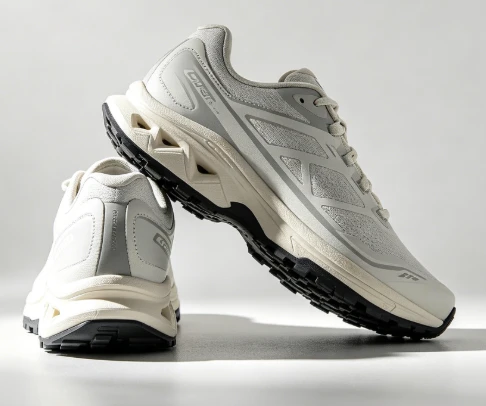
We live with shoes every day, but have you ever noticed a subtle detail: the front of most shoes curls up slightly, some high, others relatively low. We randomly selected shoes from several brands and found that, without exception, the fronts of every shoe exhibited varying degrees of upward curvature.
When standing normally, the forefoot and toes remain flat on the ground. The upturned toe design forces our toes to tilt upward when wearing shoes. So, why are modern shoes designed this way? There are some little-known secrets hidden in this!
1. Relatively Effortless Walking
As we all know, wheels are typically round. The design of round wheels is based on a simple physical principle: rolling friction is much less than sliding friction. This design allows the wheel to efficiently utilize inertia, resulting in fast and energy-efficient travel. The semi-arc-shaped legs of a rocking chair allow the chair to roll back and forth when rocked, allowing us to move with minimal effort.

The same principle applies to the raised toe design. If the sole of the shoe were completely flat on the ground, our feet would need to flex more muscles to propel the body forward during walking, which requires more force. However, the raised toe design allows the second half of the stride to roll forward, similar to the motion of a rocking chair. This reduces movement in the metatarsophalangeal joints, thereby reducing friction and making walking less strenuous.
In some professional running shoes, we can see that the soles have curves at the front and back. This is to make the movement from heel strike to toe lift-off smoother and more natural, reducing unnecessary movement and friction and fully utilizing the inertial force during walking.
2. Reduce Reaction Force
Forces always act in a reciprocal manner. When we walk or run, from the moment our feet touch the ground until they leave it, the ground continuously exerts a reaction force on our bodies. Under normal circumstances, this reaction force can peak at nearly 1.5 times our body weight.
To mitigate the adverse effects of this reaction force on our health, the soles of most athletic shoes have some cushioning properties. The toe box is also designed with a certain degree of upward curvature. A larger upward curvature allows the body's center of gravity to shift more quickly and smoothly from the rearfoot to the forefoot during walking and running, thereby achieving a cushioning and pressure-distributing effect.
3. Protecting the Toe Box and Toes

In addition to saving energy and reducing the impact of ground reaction forces on the body, the slightly upward curvature of the toe box allows the mobility of the metatarsophalangeal joint to better cushion the impact when accidentally kicking against a hard object, thus better protecting the foot.
Is a larger toe box curvature better?
The curvature of the toe box helps save energy when walking and reduces the impact of ground reaction forces on the body. However, is a larger toe box curvature always better? The answer is no. The toe box curvature can only achieve its positive effects when maintained within a reasonable range. Excessive toe box curvature can restrict the mobility of the toe joints, affecting walking flexibility and increasing pressure on the plantar fascia, resulting in counterproductive effects.
Research from numerous scientific institutions has shown that the toe of a conventional shoe should not be tilted more than 15 degrees, meaning the tip should not be more than 1.5 centimeters from the ground. This degree of tilt makes the shoes more comfortable to wear, saving effort and reducing the negative effects of ground reaction forces on the body.
#shoes #footwear