


How to Reduce Risk When Launching Your First Custom Sneaker Collection
Feb 27, 2026
Leave a message
Launching a sneaker brand is exciting-but manufacturing mistakes can quickly destroy momentum.
A professional sneakers manufacturer sees the same early-stage risks repeatedly: unrealistic MOQs, incomplete tech packs, cost miscalculations, and supplier misalignment.
This guide explains how to reduce production risk when launching your first custom sneaker collection.
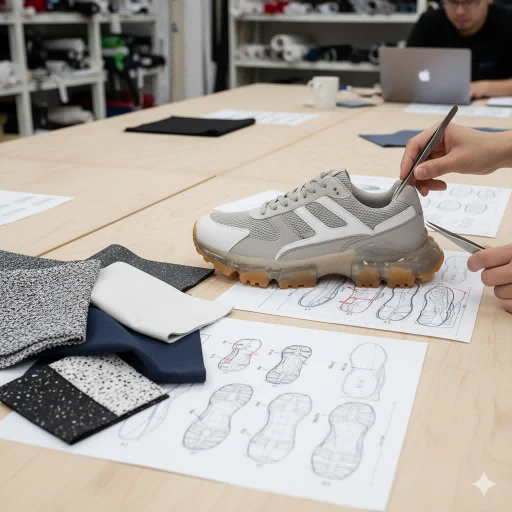
Risk 1: Starting with Over-Customization
New brands often want:
Custom outsole molds
Unique materials
Multiple colorways
Complex logo applications
Each adds cost and production variables.
A smarter approach is:
Use existing outsole molds
Simplify upper materials
Launch with 1–2 colorways
A practical sneakers manufacturer will guide you toward stable first production, not excessive complexity.
Risk 2: Ignoring MOQ Structure
Most sneakers manufacturers require:
300–500 pairs per colorway
EVA or rubber outsole minimum runs
Batch-based material purchasing
Trying to produce 50 pairs increases cost and instability.
For startups, a safer path is:
Begin with manufacturer-developed styles
Use proven tooling
Produce around 100 pairs for market testing (when using existing systems)
This reduces tooling investment while maintaining professional quality.
Risk 3: Underestimating Capital Requirements
Sneaker production cost includes:
Tooling
Material procurement
Labor
External printing and packaging
Shipping
Cash flow planning must include:
30%–50% deposit
50%–70% balance before shipment
Working with a transparent sneakers manufacturer helps avoid surprise expenses.
Risk 4: Poor Quality Control Planning
Quality risk increases when:
Materials are inconsistent
Communication is unclear
Production is rushed
Preventive strategies:
Approve pre-production samples
Confirm color standards
Request inline QC photos
Work with structured QC systems
A reliable sneakers manufacturer implements inspection checkpoints, not last-minute fixes.
Risk 5: Choosing the Wrong Manufacturing Partner
Price alone should never determine factory choice.
Evaluate:
Production capacity
Communication clarity
Sample quality
Transparency about MOQ
Experience with startup brands
An experienced sneakers manufacturer functions as a production partner-not just a supplier.
Smart Entry Strategy for New Brands
For first collections, consider:
Selecting from in-house developed designs
Using existing outsole molds
Limiting customization
Starting from 100–300 pairs
Testing market response before scaling
This approach reduces tooling cost, simplifies material sourcing, and accelerates entry into the market.
Long-Term Risk Reduction Strategy
After initial validation:
Gradually introduce custom molds
Increase order quantity
Optimize cost per pair
Strengthen supplier relationships
Sustainable scaling depends on structured manufacturing decisions.
Final Thoughts
Launching your first sneaker collection is not just about design-it is about industrial execution.
Working with an experienced sneakers manufacturer who prioritizes transparency, realistic MOQ planning, and production stability dramatically reduces risk.
The goal is not to launch fast.
The goal is to launch correctly-and scale confidently.