


How to Evaluate Women’s Lambskin Loafers for Retail: A Buyer’s Guide
Sep 18, 2026
Leave a message

How to Evaluate Women's Lambskin Loafers for Retail: A Buyer's Guide
A women's loafer may look simple at first glance. But for a footwear buyer, small details such as the leather, shoe last, vamp construction, decorative hardware and outsole can make a significant difference to the final product.
This is especially important when developing women's lambskin loafers for a retail collection.
A product photo can show the overall style, but it cannot tell you everything about how the leather feels, how the shoe fits, or whether the construction works as expected.
That is why we prefer to review physical samples during footwear development. In our office, we keep women's loafer samples in different colors, materials and constructions. Comparing them side by side gives us a practical way to evaluate materials, fit and finishing before bulk production.

Why Women's Loafers Remain Popular in Retail
Loafers are relatively versatile within a women's footwear collection.
A classic brown loafer can work with workwear or smart-casual styling, while a black flat loafer can fit an everyday footwear range. Lighter colors and perforated constructions can give the same basic loafer silhouette a more seasonal direction.
But versatility does not mean every loafer will work for every market.
Before selecting a style, buyers should consider:
Target customer
Retail price positioning
Intended wearing environment
Size range
Fit expectations
Leather and material requirements
Decoration and branding
Expected order quantity
Why Choose Lambskin for Women's Loafers?
Lambskin is often considered when a brand wants a softer hand feel and a smooth, premium-looking upper.
For women's loafers, this can work particularly well with clean and feminine designs where the appearance and feel of the upper are important.
However, choosing lambskin does not automatically guarantee a better loafer.
The final result depends on how the leather works with the upper construction and shoe last. A soft leather upper can still produce an uncomfortable or poorly shaped shoe if the internal proportions are not suitable.
For this reason, we recommend evaluating the leather together with the actual shoe construction rather than judging the material separately.
What to Look for When Reviewing a Real Lambskin Loafer Sample
1. Check the Leather Appearance and Surface
The first thing we look at is the relationship between the leather and the shape of the shoe.
When reviewing a genuine lambskin loafer sample, buyers should pay attention to:
Surface texture
Color consistency
Leather thickness
Flexibility
Natural appearance
Edge finishing
Stitching areas
Areas where the upper changes direction
A close-up photograph can show the color and surface, but it cannot answer every question about the material. Buyers should still confirm the leather specification and intended use with the manufacturer.
Color can also affect how quality issues appear.
For example, darker colors may make certain surface marks easier to notice, while light-colored uppers require more attention to cleanliness, edge treatment and color consistency.
The sample stage is the right time to identify these details-not after bulk production has started.
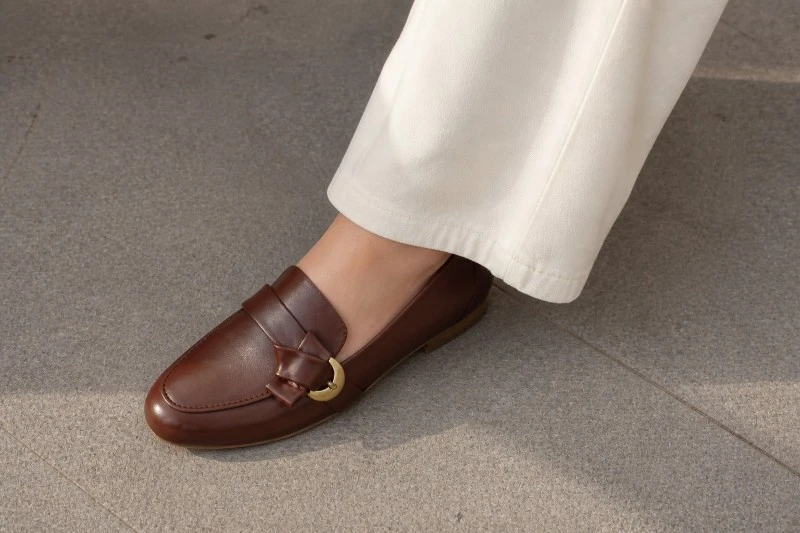
Our brown loafer sample combines a rounded apron toe, vamp strap, bow detail and gold-tone ring. It demonstrates how relatively simple loafer construction can be given a more feminine retail direction.
2. Pay Attention to the Shoe Last and Fit
One of the most important points buyers should understand is that comfort does not begin with the insole. It begins with the shoe last.
The last influences:
Toe shape
Forefoot width
Instep height
Topline
Heel hold
Internal foot space
A soft leather upper cannot compensate for an unsuitable shoe last.
For example, a loafer may feel soft when you touch the upper but still feel tight around the forefoot when worn.
During sample evaluation, check more than the shoe length. Look at:
Is there enough room around the toes?
Is the forefoot too narrow?
Does the vamp cover the instep comfortably?
Does the heel stay in place when walking?
Does the shoe maintain its shape?
Does the fit remain consistent across the intended size range?
Size grading is also important. The proportions of a loafer can change as the style is graded into different sizes.
If width or fit needs adjustment, the sample stage is the right time to discuss changes with the manufacturer. Once bulk production has started, changing the last or upper construction becomes much more complicated.
3. Inspect Decorative Details as Part of Quality Control
Decorative elements can help a loafer stand out in a retail collection, but they also create additional quality-control points.
Our loafer samples include different details such as:
Wide vamp straps
Layered fringe
Braided bows
Perforated panels
Metal hardware
For each decorative element, check:
Is it centered?
Are the left and right shoes symmetrical?
Are the edges clean?
Is the attachment secure?
Does the decoration match the overall shoe shape?
For example, our off-white perforated loafer combines openwork detailing, contrast edging and a lace-up bow. The cut-outs and edges need to remain consistent.
A black loafer with layered fringe creates a more relaxed look, but the fringe requires additional attention to alignment, edge finishing and attachment points.
Decoration is not simply a design issue. It is also a manufacturing and QC issue.
4. Check the Outsole and Daily-Wear Construction
For loafers designed for office wear or everyday use, buyers should also evaluate the shoe from the bottom up.
Check:
Outsole pattern
Flexibility
Bonding
Upper-to-sole connection
Overall sole construction
It is important not to make assumptions based only on photographs.
A product image cannot prove slip resistance or long-term durability. Those characteristics require appropriate inspection or testing.
At the sample stage, buyers can ask the manufacturer whether the selected sole construction is suitable for the intended use and what specifications or testing options are available.
The right outsole choice may depend on the target price, retail environment and customer expectations.
Women's Lambskin Loafer Sample Checklist
Before approving a sample for bulk production, we recommend reviewing the following areas:
| Area | What Buyers Should Check |
|---|---|
| Lambskin Upper | Color, texture, surface, thickness and flexibility |
| Shoe Last | Toe room, forefoot width, instep coverage and heel hold |
| Construction | Stitching, edges and upper-to-sole connection |
| Decoration | Alignment, symmetry, finishing and attachment |
| Lining & Insole | Surface feel, cleanliness and finishing |
| Outsole | Grip pattern, flexibility, bonding and construction |
| Size Range | Fit consistency across the selected sizes |
| Packaging | Protection from pressure, scratches and deformation |
This checklist is not a replacement for formal quality inspection. Instead, it gives buyers a practical starting point for discussing the sample with a women's loafer manufacturer.
7 Questions to Ask a Women's Loafer Manufacturer Before Bulk Production
Before placing a wholesale or private-label order, it is worth clarifying the following questions:
Ask whether the manufacturer can provide lambskin and other genuine leather options, and whether alternative materials are available for different target price points.
If your customers have specific width or fit requirements, ask whether the last can be modified during sample development.
This is particularly important when the same style will be produced in multiple colors.
For bows, fringe, hardware and perforated panels, ask how alignment, attachment and finishing are controlled.
A physical sample allows both sides to confirm the design before bulk production.
Ask how the pattern and last are graded across your selected size range and whether fit will be checked across the sizes.
If you are developing your own footwear collection, discuss options for logos, insoles, packaging and other private-label requirements early in the development process.
Why Reviewing a Physical Sample Matters
For footwear buyers, the sample is more than a visual reference.
It is an opportunity to evaluate the relationship between material, construction, fit and finishing before committing to bulk production.
For example, our existing loafer samples allow us to compare different directions, including:
Brown loafer with gold-tone hardware
Black loafer with decorative fringe
Off-white perforated loafer
Clean wide-strap loafer constructions
Different vamp and toe shapes
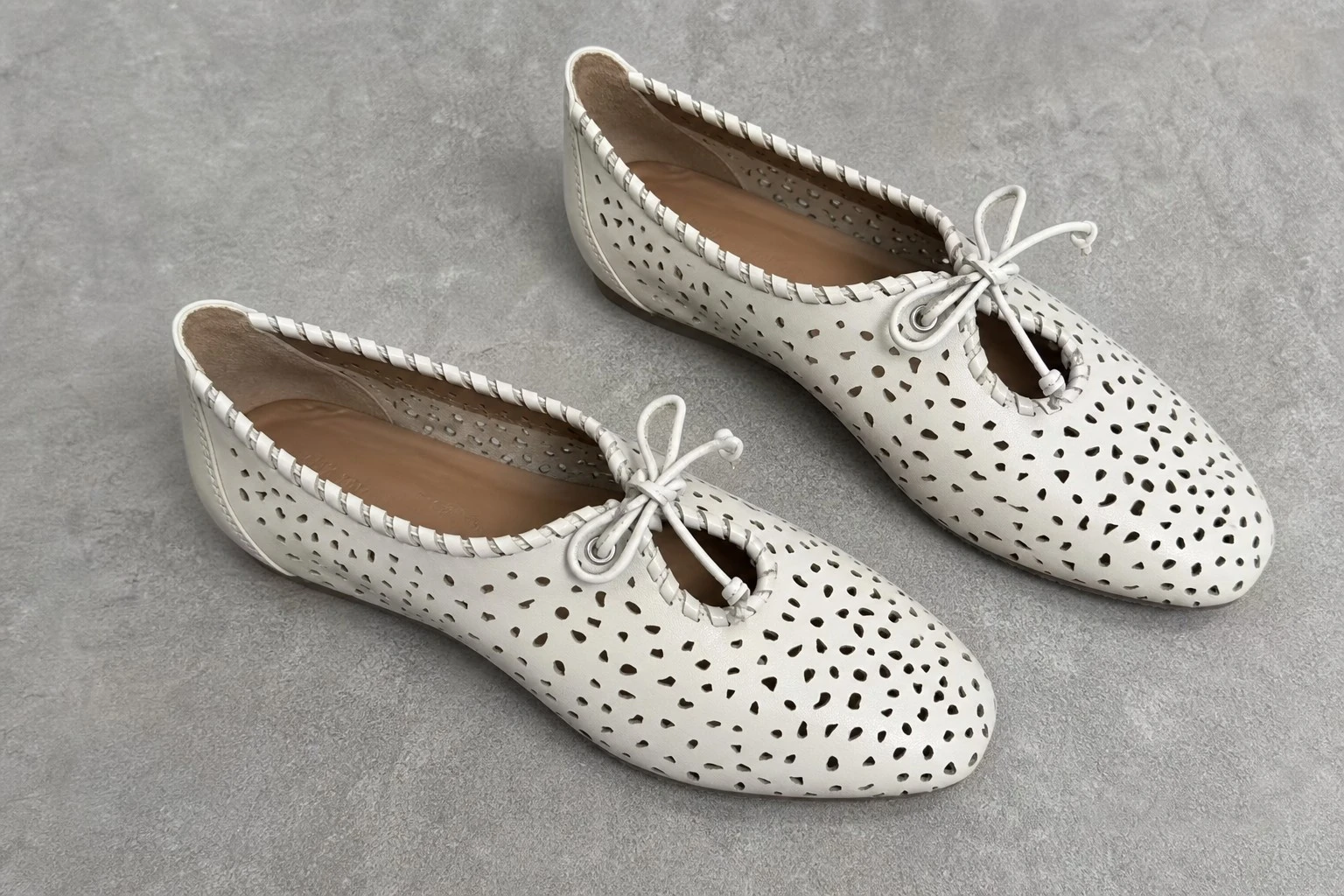
These samples help make discussions with buyers more specific.
Instead of simply saying that a material is "soft" or a design is "comfortable," we can discuss the actual leather, shoe last, construction and finishing involved in the sample.
That is also why we recommend moving from product photos to physical sample development once the basic design direction has been confirmed.
Conclusion: Use the Sample to Make Better Decisions
A retail-ready women's loafer is not defined by one feature.
The leather needs to work with the shoe construction. The shoe last needs to provide appropriate internal space. Decorative details need to be consistent and securely attached. The outsole needs to match the intended use.
Most importantly, these elements should be evaluated before bulk production.
If you are developing a collection of women's lambskin loafers, a physical sample can help you identify potential issues earlier and make more informed decisions about materials, fit and construction.
Planning a Women's Lambskin Loafer Collection?
Send us your reference design, target market, preferred materials, size range and estimated quantity.
We can discuss suitable genuine leather options, shoe-last requirements, sample development and private-label production for your project.
REQUEST A LOAFER SAMPLESEND YOUR DESIGNGET A WHOLESALE QUOTE