


Custom Shoe Box Packaging Guide
Jan 06, 2026
Leave a message
Custom Shoe Box Packaging Guide
What details should I prioritize when customizing shoe boxes for men's casual sneakers from China?
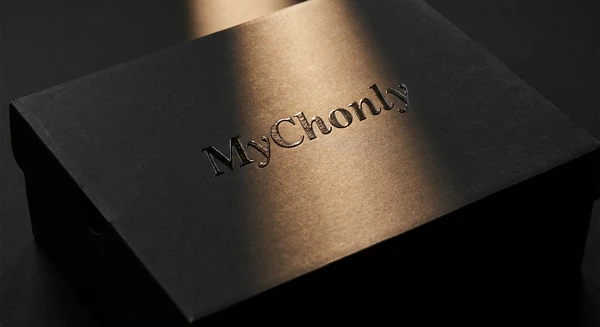
You have spent months perfecting your sneaker design. But if the box arrives crushed or looks cheap, your customer's excitement turns into disappointment before they even lace up the shoes.
To create successful packaging, prioritize E-Flute corrugated board for crush resistance and choose foldable designs to slash freight costs. Elevate your branding cost-effectively with Spot UV logos and high-quality tissue paper, while ensuring all materials are FSC-certified and treated with anti-mold chips to prevent humidity damage.
The box is the first handshake between your brand and your customer. Let me guide you on how to make it firm and impressive without breaking your budget.
How can I ensure my custom shoe boxes are sturdy enough to prevent crushing during shipping?
A crushed box makes your brand look unprofessional and leads to increased returns. You need packaging that survives the brutal journey from a Chinese factory to your customer's doorstep.
You should specify E-Flute Corrugated Board with a thickness of 1.5–2.0mm. This material offers the optimal balance of strength for stacking and a smooth surface for printing. For Direct-to-Consumer (DTC) brands, upgrade to a 32 ECT (Edge Crush Test) rating so the box can survive shipping without an outer carton.

When I help clients like Jeff Smith design their packaging, the first mistake they usually make is choosing the wrong board grade. They pick standard cardboard (like a cereal box) which looks fine in a digital render but collapses under the weight of a shipping pallet.
The Material Sweet Spot: E-Flute
In the packaging industry, "Flute" refers to the wavy paper between the liner boards.
- B-Flute: This is thick and strong, but it has a problem called "washboarding." You can see the ugly lines of the waves through your printed logo. It looks cheap.
- E-Flute: This is the gold standard for shoe boxes. It is thinner (about 1.8mm) but very dense. It provides a perfectly smooth surface for high-quality lithographic printing [1] while remaining tough enough to handle stacking pressure.
The "DTC-Ready" Standard
If you are selling online (Direct-to-Consumer), your box has a harder job. It isn't just sitting on a shelf; it is being thrown into trucks. I always advise my DTC clients to use the "32 ECT" standard.
- ECT (Edge Crush Test): This measures how much weight the edges can hold before buckling. A 32 ECT [2] rating means the box is strong enough to be shipped in a simple poly mailer bag. You do not need to buy a second, brown "master" shipping box for every single order. This saves you labor and material costs.
Finish Durability: The Matte Black Trap
Men's casual sneakers often come in matte black boxes. They look cool, but they are a nightmare for durability. Standard matte finishes from Chinese factories scuff very easily. During transit, the vibration makes the boxes rub against each other. They arrive looking "used" and dusty.
The Solution: You must specify "Anti-Scratch" Matte Lamination. It costs a few cents more per unit, but it is the only way to ensure your black box arrives looking pristine.
Sturdiness Comparison Table
| Board Type | Thickness | Print Quality | Crush Resistance | Best For |
|---|---|---|---|---|
| Standard Cardstock | 0.5 mm | High | Very Low | Budget Retail Shelves |
| B-Flute | 3.0 mm | Low (Washboarding) | High | Industrial Shipping |
| E-Flute (Recommended) | 1.8 mm | High (Smooth) | High | Premium Sneaker Boxes |
| Rigid Greyboard | 2.0 mm | High | Medium | Luxury Gift Boxes |
How does the size and design of the shoe box affect my international freight costs?
Shipping "air" is the quickest way to destroy your profit margins. If your boxes are rigid or poorly sized, you are paying thousands of dollars to ship empty space across the ocean.
You must prioritize Foldable or "Aircraft" style boxes over pre-assembled rigid boxes to reduce shipping volume by up to 70%. Additionally, reverse-engineer your box dimensions based on Master Carton efficiency; reducing the width by just 0.5cm can allow you to fit two extra pairs per carton, significantly lowering per-unit freight costs.

Freight is often the second biggest cost after the product itself. I see many designers create a beautiful "Lid and Base" box (like an iPhone box) without realizing the logistical nightmare it creates.
The "Shipping Air" Problem
A rigid "Lid and Base" box is fully assembled at the factory. It takes up a huge amount of space.
- Rigid Box: You are paying to ship the empty air inside the box from China to the USA.
- Foldable Box: This ships flat. You can fit 3,000 flat boxes in the same space as 500 rigid boxes.
Unless you are a super-luxury brand selling \$500 shoes, always choose a foldable "Aircraft" (mailer) style box. It keeps your "Landed Cost" low.
Master Carton Optimization
This is a technique I use at Mychonly to save my clients money. We do not just guess the box size. We calculate it backwards from the shipping container.
- The Scenario: A standard Master Carton [3] is usually 60cm x 40cm x 40cm.
- The Math: If your shoe box is 31cm long, we can only fit one row in the carton length-wise. We waste 29cm of space!
- The Fix: If we shrink the shoe box to 29.5cm, we can fit two rows perfectly.
Suddenly, your Master Carton holds 12 pairs instead of 10 pairs. Your shipping cost per pair drops by 17% instantly. This is pure profit.
Variable Data Strategy
Another design trick is to stop printing size details on the box.
- The Old Way: You print separate boxes for "Size 8," "Size 9," "Size 10." If Size 8 sells out, you are stuck with empty Size 10 boxes.
- The Smart Way: Use a single "Generic" box design for all sizes. Then, design a dedicated "Blank Zone" on the side. At the factory packing line, we apply a high-quality Thermal Transfer Sticker [4] with the specific size, barcode, and colorway. This simplifies your inventory and prevents waste.
Freight Cost Impact Analysis
| Box Style | Shipped State | Units per 40HQ Container | Freight Cost Per Pair |
|---|---|---|---|
| Rigid Lid & Base | Assembled (Empty) | ~4,000 sets | High ($$$) |
| Standard Mailer | Flat Packed | ~15,000 sets | Low ($) |
| Optimized Mailer | Flat Packed | ~18,000 sets | Lowest (Best Value) |
What are the most cost-effective ways to add my brand logo to the packaging and tissue paper?
You want your packaging to look expensive and luxurious, but expensive tooling molds for logos can drain your startup budget. You need a way to look premium for pennies.
Use Spot UV coating to create a glossy, tactile logo against a matte background for a high-end look without expensive molds. Invest in high-GSM (20-30g) branded tissue paper, as the crisp sound and feel of premium wrapping creates a stronger psychological perception of luxury than the box itself.

Branding is about perception. You do not need gold plating to make a customer feel special. You just need to understand manufacturing contrast.
The Power of Spot UV
Foil stamping [5] (using gold or silver foil) requires a metal copper mold. This costs money to make and setup. It also has a higher defect rate (foil peeling).
- The Alternative: Spot UV [6]. This is a clear, glossy varnish applied only over your logo.
- The Effect: When the customer holds the matte box, their thumb feels the slippery, raised texture of the glossy logo. It catches the light. It feels expensive, but it costs almost nothing because it is just a layer of clear ink. It is the best "bang for your buck" in packaging design.
The "Tissue Paper" Distract
Here is a secret from consumer psychology: Customers judge quality by sound.
- Cheap Tissue: Standard 14g tissue paper is flimsy and silent. It feels like toilet paper.
- Premium Tissue: High-Grams per Square Meter [7] (GSM) tissue (20g or 30g) is crisp. When the customer opens the box, it makes a satisfying "crinkle" sound. It is semi-transparent and feels substantial.
- The Strategy: Instead of spending \$0.50 to make the cardboard thicker, spend \$0.05 to upgrade the tissue paper. The customer will perceive the entire package as higher quality because of that initial tactile interaction.
Inside-the-Box Branding
Don't waste money printing the bottom of the box where no one looks. Focus on the "Unboxing View."
- Inner Lid: This is prime real estate. When the box opens, the inside of the lid faces the customer. Print your brand story, a "Thank You" note, or a QR code for a discount here. It is a single-color print, which is very cheap, but it adds massive personality to the experience.
Branding Cost Efficiency Matrix
| Branding Method | Tooling Cost | Unit Cost Impact | Visual Impact |
|---|---|---|---|
| Foil Stamping | High (Copper Mold) | High | Luxury / Classic |
| Embossing | High (Metal Mold) | Medium | Subtle / Tactile |
| Spot UV | Low (Screen) | Low | Modern / Premium |
| CMYK Print | None (Digital/Plate) | Low | Standard |
Could I request eco-friendly or recycled packaging materials to align with my brand's sustainability goals?
Your customers care about the planet, and new regulations are making sustainable packaging a legal requirement, not just a choice. You need to ensure your "green" packaging doesn't get rejected by customs or ruined by mold.
You must verify compliance with China's 2025 Green Packaging Regulations by requesting FSC-certified paper and soy-based inks. Replace standard petroleum laminations with water-based varnishes and strictly require Anti-Mold Chips to prevent "blooming" during humid ocean transport.
Sustainability is serious business now. In 2025, China and the EU are tightening rules on packaging waste. If your box is coated in plastic that cannot be recycled, you might face fines or customs delays.
The Green Compliance Mandate
To be safe for export to the US and Europe, you need to check three boxes with your Chinese supplier:
- FSC Certified Paper: This proves the wood pulp came from responsibly managed forests. You can print the FSC Certified Paper [8] logo on your box, which is a huge trust signal for Western consumers.
- Soy-Based Inks: Traditional inks use petroleum. Soy-Based Inks [9] are vibrant, cheaper to recycle, and required by many new environmental laws.
- Water-Based Varnish: Do not use "Plastic Lamination" (a thin layer of PP plastic glued to the paper). It makes the box non-recyclable. Use a water-based varnish or Anti-Scratch Matte Lamination [10] (if biodegradable) instead. It protects the ink but dissolves in the recycling pulping process.
The Mold Threat
This is a specific issue for manufacturing in Southern China (Fujian, Guangdong). It is very humid here.
- The Risk: If the moisture content of the glue or cardboard exceeds 12%, mold will grow inside the closed box during the 30-day ocean voyage. We call this "blooming."
- The Solution: You must require Anti-Mold Chips (like the brand Micro-Pak). These are small stickers that release an invisible gas to kill mold spores.
- The Prevention: Also, demand that the factory dry the boxes in a dehumidification room before packing. Do not let them pack shoes into damp boxes on a rainy day.
Recycled vs. Virgin Material
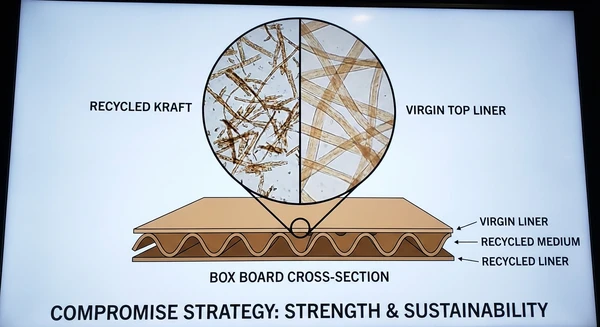
You might want "100% Recycled" kraft paper. It looks very "eco," which is great for marketing. However, be aware that recycled fibers are shorter and weaker than virgin fibers.
- The Compromise: I usually recommend a "Top Liner" of virgin paper (for strength and print quality) over a "Corrugated Medium" of 100% recycled waste. This gives you the best of both worlds: a strong box that is still mostly recycled material.
Sustainability Specification Sheet
| Component | Standard Option (Avoid) | Eco-Friendly Option (Select) | Benefit |
|---|---|---|---|
| Inks | Petroleum-based | Soy or Vegetable-based | Easier to de-ink and recycle. |
| Coating | PP Lamination (Plastic) | Water-based Varnish | 100% Plastic-free box. |
| Protection | Silica Gel Packets | Anti-Mold Chips (Micro-Pak) | More effective against mold. |
| Paper Source | Unknown Source | FSC Mix / Recycled | Legal compliance & ethics. |
Conclusion
Great packaging is a balance of engineering and art. By choosing E-Flute for strength, foldable designs for savings, and eco-friendly materials for compliance, you protect your product and your brand reputation.